Every iPhone in order, from the original to the iPhone 18 Pro Max
All 55 iPhones, from the 2007 original to the iPhone 18 Pro Max and the foldable Duo, year by year, plus the upgrades that really mattered.
Disclosure: This article may contain affiliate links. If you buy through them we may earn a small commission at no extra cost to you. It never influences our editorial opinion. As an Amazon Associate, GeekyGoo earns from qualifying purchases.
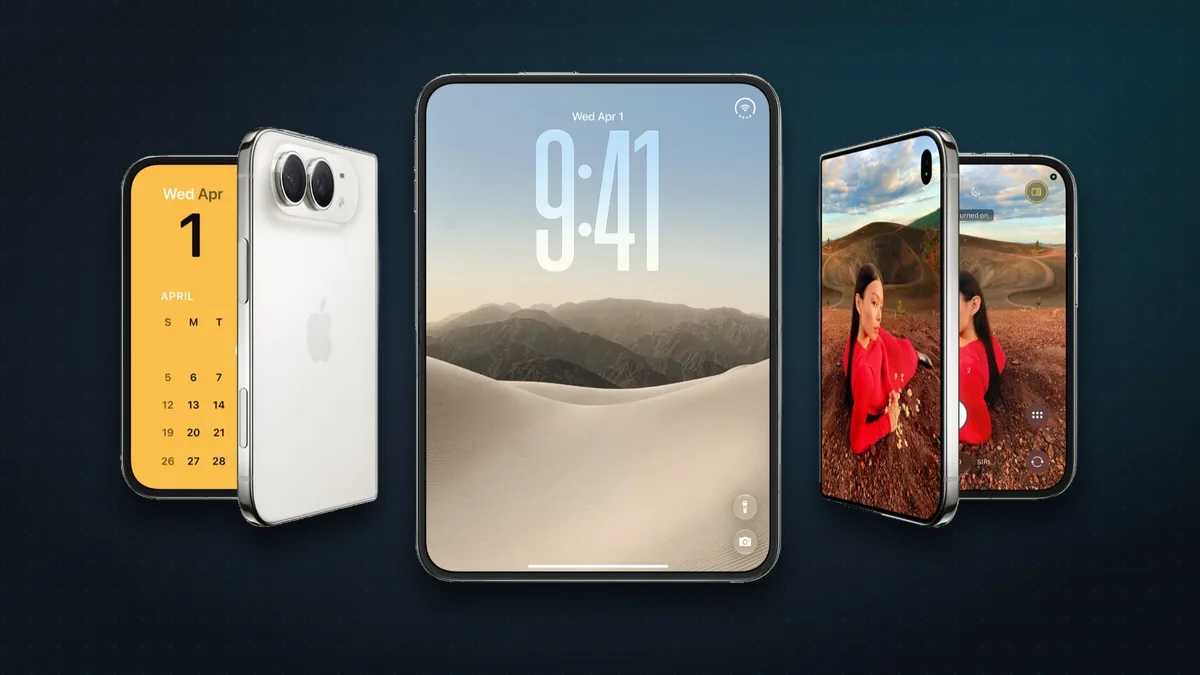
By our count, Apple has released 55 iPhones in less than 20 years. The first had a 3.5-inch screen, no App Store and no 3G. The newest folds open into a 7.6-inch tablet. Here’s every model in order, the handful of upgrades that really changed how we use phones, and what that history tells you about buying your next one.
Our editor, Amit Jalan, has used the iPhone since the original. Before that he carried HP Pocket PC phones and Nokias. Today his phone is an iPhone 18 Pro Max.
Every iPhone at a glance
| Year | Models | What was new |
|---|---|---|
| 2007 | iPhone | A multi-touch screen, a full web browser and visual voicemail. No App Store, no 3G. |
| 2008 | iPhone 3G | 3G, GPS and the App Store. The first iPhone sold in India. |
| 2009 | iPhone 3GS | Faster, with video recording, voice control and a compass |
| 2010 | iPhone 4 | The Retina display, FaceTime and a front camera |
| 2011 | iPhone 4S | Siri, an 8MP camera and 1080p video |
| 2012 | iPhone 5 | A taller 4-inch screen, the Lightning connector and LTE |
| 2013 | iPhone 5s, 5c | Touch ID and the first 64-bit phone chip; a colourful plastic 5c |
| 2014 | iPhone 6, 6 Plus | Big screens (4.7 and 5.5 inches) and Apple Pay |
| 2015 | iPhone 6s, 6s Plus | 3D Touch, Live Photos, a 12MP camera and 4K video |
| 2016 | iPhone SE, 7, 7 Plus | A 4-inch SE; the 7 drops the headphone jack and adds water resistance; the 7 Plus gets two cameras |
| 2017 | iPhone 8, 8 Plus, X | Glass backs and wireless charging; the X brings Face ID and an edge-to-edge OLED screen |
| 2018 | iPhone XS, XS Max, XR | Dual SIM via eSIM; a 6.5-inch XS Max; the cheaper, colourful XR |
| 2019 | iPhone 11, 11 Pro, 11 Pro Max | An ultra-wide camera and Night mode; three cameras on the Pros |
| 2020 | iPhone SE (2nd gen), 12 mini, 12, 12 Pro, 12 Pro Max | 5G, MagSafe and flat edges; the charger leaves the box |
| 2021 | iPhone 13 mini, 13, 13 Pro, 13 Pro Max | Cinematic mode and longer battery life; a 120Hz ProMotion screen on the Pros |
| 2022 | iPhone SE (3rd gen), 14, 14 Plus, 14 Pro, 14 Pro Max | Emergency SOS via satellite and Crash Detection; the Dynamic Island, a 48MP camera and an always-on screen on the Pros |
| 2023 | iPhone 15, 15 Plus, 15 Pro, 15 Pro Max | USB-C on every model; titanium and the Action button on the Pros |
| 2024 | iPhone 16, 16 Plus, 16 Pro, 16 Pro Max | Camera Control, the Action button on every model, and Apple Intelligence |
| 2025 | iPhone 16e, 17, Air, 17 Pro, 17 Pro Max | The 16e replaces the SE; a 120Hz screen on the standard 17; the 5.6 mm Air; aluminium Pros |
| 2026 | iPhone 17e, 18 Pro, 18 Pro Max, Duo | The A20 Pro chip and the longest iPhone battery life yet; Apple’s first foldable |
The upgrades that really mattered
Twenty years of launches blur together, and most years bring a faster chip and a better camera. These are the changes that altered how people actually use a phone.
1. The App Store (2008)
The original iPhone ran only Apple’s own apps. When the App Store opened on 10 July 2008, the day before the iPhone 3G went on sale, it had more than 500 apps. That’s what turned a clever phone into a platform, and almost everything since depends on it.
2. The Retina display (2010)
The iPhone 4 packed 326 pixels per inch, which Apple said was dense enough that your eye couldn’t pick out individual pixels at a normal distance. Text suddenly looked printed rather than displayed, and reading on a phone became comfortable.
3. Unlocking with your finger, then your face (2013 and 2017)
Touch ID on the iPhone 5s made a locked phone painless to use, so there was no longer a reason to skip the passcode. It also made Apple Pay practical a year later. Face ID on the iPhone X did the same job without a button. There’s a twist, too: the 2026 iPhone Duo has no Face ID, so Touch ID is back on Apple’s most expensive phone.
4. Big screens (2014)
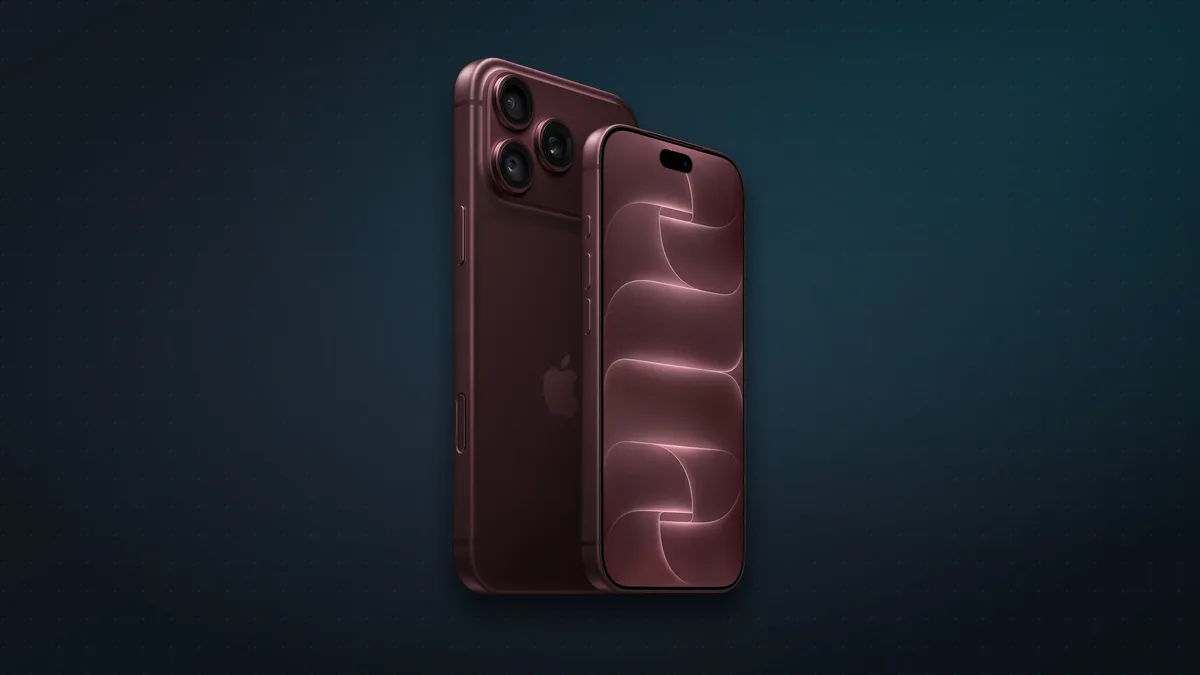
Apple held out at 4 inches while rivals went bigger. The iPhone 6 Plus finally offered 5.5 inches, and the big model has kept growing: the iPhone 18 Pro Max has a 6.9-inch screen.
5. Software-powered photos (2016 onwards)
The iPhone 7 Plus added a second camera and, soon after, Portrait mode. The iPhone 11 brought Night mode. From here on, software did as much as the lens to decide how your photos look, which is why a modern iPhone can take a usable picture in a dim room.
6. USB-C (2023)
After eleven years of Lightning, the iPhone 15 switched to USB-C, helped along by the EU’s common-charger rules. One cable now charges your iPhone, iPad, Mac and most Android phones.
7. Apple Intelligence (2024)
It’s too early to put Apple’s AI features alongside the App Store, but they mark a turning point: they need an iPhone 15 Pro or later, so for the first time Apple’s headline software features left most older iPhones out.
What Apple took away
- The headphone jack: gone with the iPhone 7 in 2016.
- The Home button: gone from the flagship with the iPhone X in 2017, and from the whole range when the 16e replaced the SE in 2025.
- The charger in the box: gone from 2020.
- The SIM tray: US models went eSIM-only with the iPhone 14 in 2022, and the iPhone Air is eSIM-only.
No iPhone 2, no iPhone 9
- There was never an “iPhone 2”. The second model was named the iPhone 3G, after the network it ran on.
- There’s no iPhone 9. In 2017, ten years after the original, Apple jumped from the iPhone 8 to the iPhone X, pronounced “ten”.
- There’s no standard iPhone 18 yet. In 2026 Apple launched only the 18 Pro models and the Duo. Bloomberg’s Mark Gurman reports that an iPhone 18 and 18e are expected in spring 2027.
What 20 years of iPhones teach you about buying
- Big redesigns come roughly every three years. The iPhone 6 (2014), iPhone X (2017), iPhone 12 (2020) and the 2025 Air and 17 Pro each changed the look; the years in between refine it. If your phone already has the design you like, the next model is rarely a big jump.
- First-generation designs can have teething problems. The iPhone 4’s antenna issue is the famous example. Today, reviewers of the iPhone Duo say many apps aren’t yet ready for its big folding screen. If you’d rather avoid surprises, wait a generation.
- Last year’s iPhone is most of this year’s. Apple keeps selling older models for less. Right now the iPhone 17 ($899 / ₹99,900) is still the one we recommend to most people over the 18 Pro ($1,199 / ₹1,64,900).
- iPhones last a long time. Apple usually supports an iPhone with major iOS updates for six years or more. A new battery costs far less than a new phone and can give an older iPhone a second life.
- Buy the storage up front. You can’t add it later. The good news is that every current iPhone starts at 256GB except the iPhone 16, which starts at 128GB.
Which iPhone should you buy today?
- Most people: the iPhone 17.
- On a budget: the iPhone 17e ($699 / ₹79,900), with the same chip as the 17.
- Biggest screen and longest battery life: the iPhone 18 Pro Max ($1,299 / ₹1,79,900), with up to 45 hours of video playback.
- You want a foldable: the iPhone Duo ($1,999 / ₹2,99,900).
Our full guide to which iPhone to buy compares all seven current models, and our iPhone Duo pros and cons covers the foldable in detail.
Just got a new iPhone? Don’t miss our iPhone tips and tricks worth knowing.
Sources & further reading
- Apple Newsroom — Apple reinvents the phone with iPhone (January 2007)
- Apple Newsroom — Apple introduces the new iPhone 3G (June 2008)
- Apple Newsroom — iPhone 3G on sale tomorrow, with 500+ App Store apps (July 2008)
- Apple Newsroom — Apple announces iPhone 3GS (June 2009)
- Apple Newsroom — Apple presents iPhone 4 (June 2010)
- Apple Newsroom — Apple launches iPhone 4S, iOS 5 and iCloud (October 2011)
- Apple Newsroom — Apple introduces iPhone 5 (September 2012)
- Apple Newsroom — Apple announces iPhone 5s (September 2013)
- Apple Newsroom — Apple announces iPhone 6 and iPhone 6 Plus (September 2014)
- Apple Newsroom — Apple introduces iPhone 6s and iPhone 6s Plus (September 2015)
- Apple Newsroom — The future is here: iPhone X (September 2017)
- Apple Newsroom — iPhone 8 and iPhone 8 Plus (September 2017)
- Apple Newsroom — Apple introduces iPhone XR (September 2018)
- Apple Newsroom — Apple introduces dual-camera iPhone 11 (September 2019)
- Apple Newsroom — iPhone SE (April 2020)
- Apple Newsroom — iPhone 12 and iPhone 12 mini with 5G (October 2020)
- Apple Newsroom — Apple unveils iPhone 13 Pro and iPhone 13 Pro Max (September 2021)
- Apple Newsroom — Apple debuts iPhone 14 Pro and iPhone 14 Pro Max (September 2022)
- Apple Newsroom — Apple debuts iPhone 15 and iPhone 15 Plus (September 2023)
- Apple Newsroom — Apple introduces iPhone 16 and iPhone 16 Plus (September 2024)
- Apple Newsroom — Apple debuts iPhone 16e (February 2025)
- Apple Newsroom — Apple debuts iPhone 17 (September 2025)
- Apple Newsroom — Introducing iPhone Air (September 2025)
- Apple Newsroom — Apple unveils iPhone 17 Pro and iPhone 17 Pro Max (September 2025)
- Apple Newsroom — Apple debuts iPhone 18 Pro and iPhone 18 Pro Max (September 2026)
- Apple Newsroom — Apple unveils iPhone Duo (September 2026)
- Macworld — iPhone 18 and 18e: expected spring 2027 release
Keep reading
The best iPhone Duo apps, and the big ones that aren't ready yet
Which apps make the most of the iPhone Duo's folding screen, from Netflix and Fantastical to games that use the hinge, plus popular apps that aren't ready yet.
Read more →
The best iPhone Duo cases and accessories (2026)
The best cases for Apple's foldable iPhone Duo, from $30 clear cases to rugged and leather picks, plus the chargers, screen protectors and add-ons worth buying.
Read more →
iPhone Duo: pros, cons, and should you buy Apple's first foldable?
iPhone Duo pros and cons: Apple's first foldable costs $1,999 (₹2,99,900). What reviewers love and don't, how it compares with rivals, and who should buy one.
Read more →