Asus ProArt P16 with Nvidia RTX Spark: price, specs, what reviewers say, and should you buy it?
The Asus ProArt P16 (H7607) is one of the first laptops with Nvidia's Arm-based RTX Spark chip and up to 128 GB of memory for local AI. US and India prices, specs, review verdicts, Windows-on-Arm catches and who should buy it.

Disclosure: This article may contain affiliate links. If you buy through them we may earn a small commission at no extra cost to you. It never influences our editorial opinion. As an Amazon Associate, GeekyGoo earns from qualifying purchases.
Most creator laptops pair an Intel or AMD processor with a separate Nvidia graphics card. The new Asus ProArt P16 (H7607) does something different. It’s built around Nvidia’s RTX Spark, an Arm-based chip that combines the processor, graphics and up to 128 GB of shared memory in one package, designed to run big AI models right on the laptop.
It’s one of the first RTX Spark laptops, on sale since 16 October from $2,799.99 up to $6,999.99, and in India from ₹4,99,990. Here’s what it is, what early reviewers think, the catches of running Windows on Arm, and who it’s actually for.
We haven’t tested the ProArt P16 ourselves. This guide is based on Asus’s and Nvidia’s official specs and the independent reviews linked at the end.
Asus ProArt P16 (RTX Spark) at a glance
| Asus ProArt P16 (H7607) | |
|---|---|
| US price | $2,799.99 to $6,999.99 |
| India price | From ₹4,99,990 |
| Chip | Nvidia RTX Spark N1X (Arm CPU + Blackwell GPU) |
| CPU / GPU | 18-core / 5,120 CUDA cores, or 20-core / 6,144 CUDA cores |
| Memory | 24, 32, 64 or 128 GB unified LPDDR5X |
| Storage | 512 GB to 2 TB, two PCIe 5.0 slots |
| Screen | 16-inch 4K tandem OLED, 120 Hz (one model has a 3K OLED) |
| Battery | 99.9 Wh, 140 W USB-C charger |
| Weight | 1.77 kg (3.9 lb), 12.9–15.9 mm thin |
| Software | Windows 11 on Arm |
What is Nvidia RTX Spark?
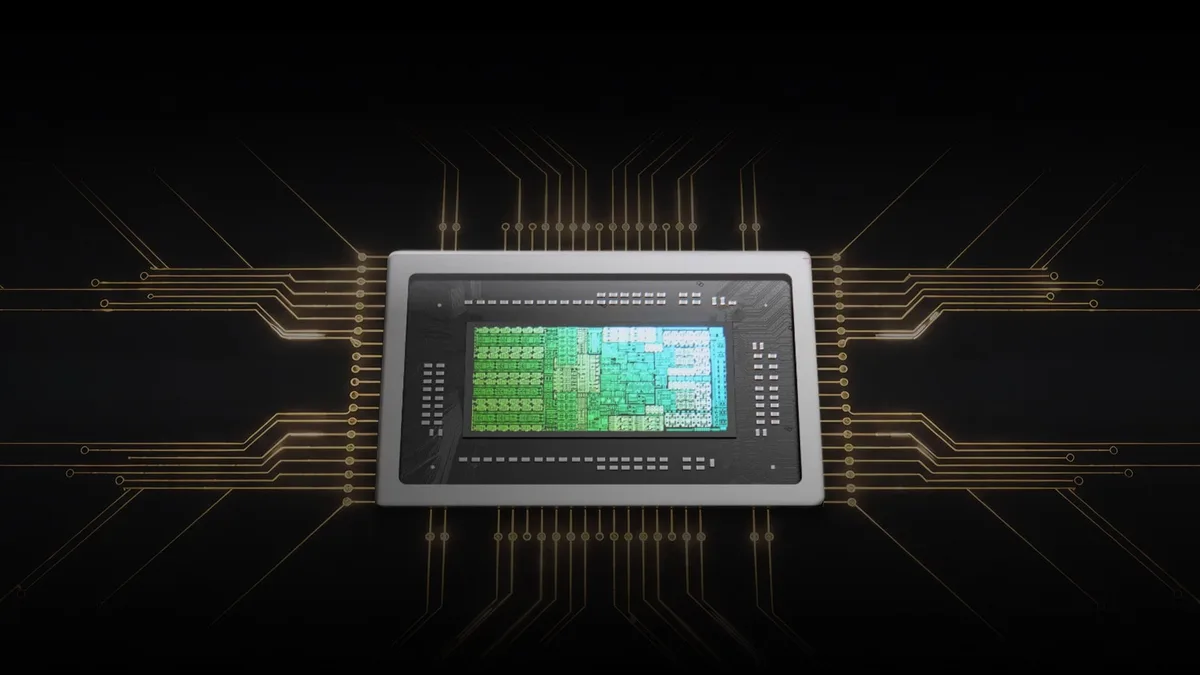
Nvidia announced RTX Spark at Computex in May 2026, and the first laptops went on sale on 16 October. It’s essentially a laptop version of Nvidia’s DGX Spark AI mini PC, but running Windows 11 instead of Linux.
- Arm processor plus Nvidia graphics in one chip. Up to 20 Arm CPU cores, co-designed with MediaTek, and a Blackwell GPU with up to 6,144 CUDA cores.
- Unified memory. The CPU and GPU share one pool of up to 128 GB, so the graphics side isn’t limited to 8 or 16 GB of video memory like a normal laptop GPU.
- Built for local AI. Nvidia rates the top version at up to 1 petaflop of AI compute and says it can run AI models with up to 120 billion parameters on the laptop itself, with no cloud needed.
Why does memory matter so much? AI models have to fit in memory to run quickly. A typical gaming laptop GPU with 8 or 12 GB can’t load the larger models, while a 128 GB RTX Spark machine can. For the background, see our guide to running local LLMs on your laptop.
Prices and configurations (US)
| Model | Chip | Memory / storage | Screen | Price | Where |
|---|---|---|---|---|---|
| Entry | 18-core CPU, 5,120-core GPU | 24 GB / 512 GB | 4K OLED | $2,799.99 | Best Buy |
| Mid | 20-core CPU, 6,144-core GPU | 32 GB / 1 TB | 4K OLED | $3,399.99 | Best Buy |
| 64 GB (Nano Black) | 20-core, 6,144-core | 64 GB / 1 TB | 3K OLED | $4,399.99 | Asus Store |
| Top | 20-core, 6,144-core | 128 GB / 2 TB | 4K tandem OLED | $6,999.99 | Asus Store, Micro Center |
A few things to know:
- Even the cheapest model has the 4K OLED. Only the $4,399.99 black 64 GB model has the lower-resolution 3K screen.
- Memory can’t be upgraded later. It’s part of the chip, so buy what you’ll need for years.
- It isn’t on Amazon US. In the US it’s sold at Best Buy, the Asus Store and Micro Center.
- A ProArt mouse and carrying sleeve come with some models, but not all. Asus says accessories vary by country.
Design: thinner, lighter, and a giant touchpad
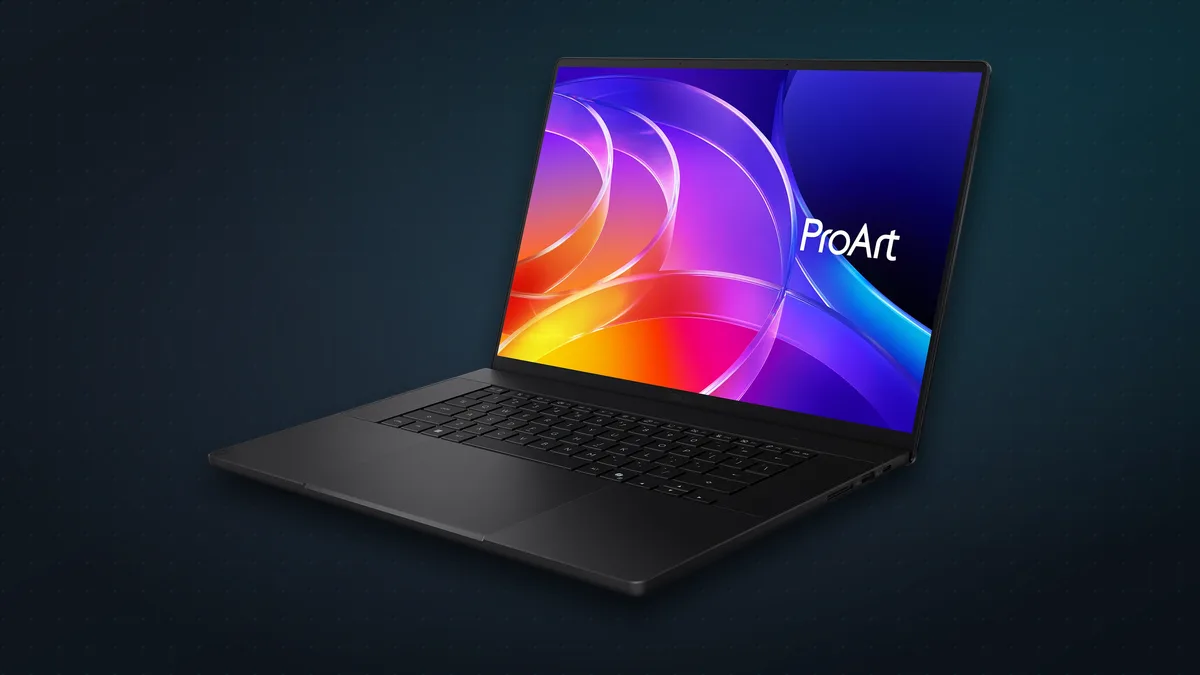
Asus says this is the thinnest 16-inch ProArt yet: 14% thinner and 9% lighter than the previous P16, at 1.77 kg (3.9 lb). It’s machined from aluminium, passes MIL-STD-810H durability tests, and comes in Nano Black or a sandblasted Neo White.
Two design changes stand out:
- It breathes through the keyboard. Air is pulled in through the keys and pushed out at the hinge, and the fans switch off completely during light work.
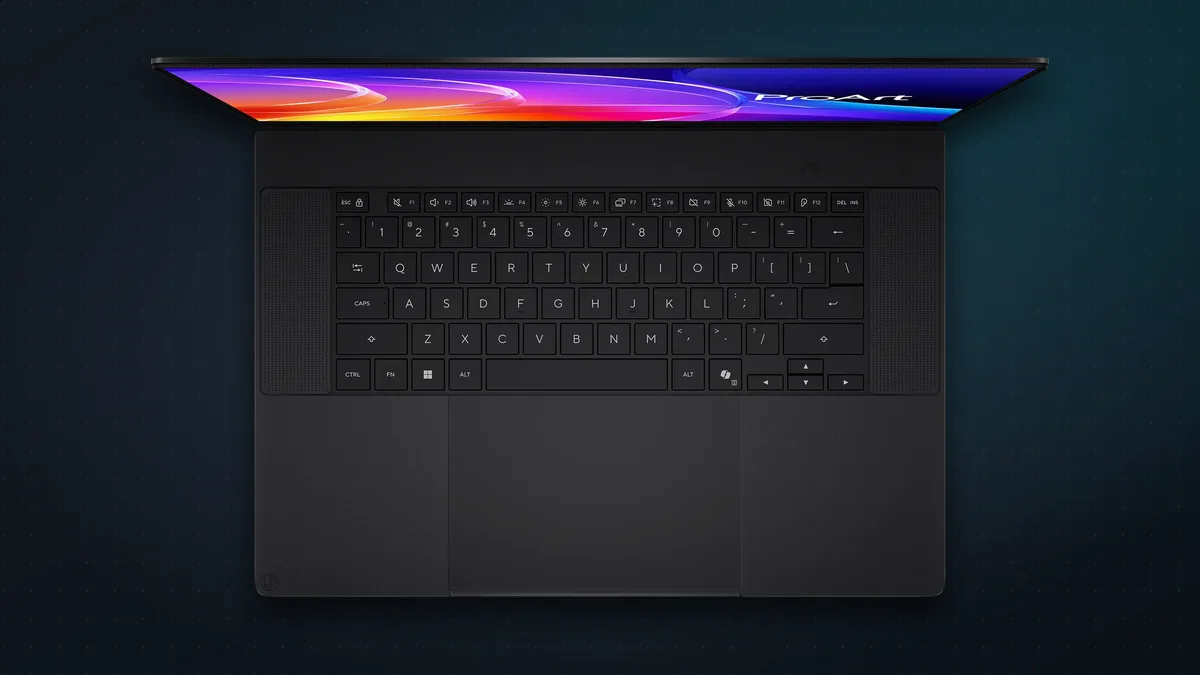
- A huge glass haptic touchpad. It replaces the physical DialPad from older ProArts. Reviewers love the size but suggest lowering its default sensitivity.
It also supports the optional Asus Pen 2.0 for drawing on the touchscreen.
Screen
Most models get Asus’s 4K tandem OLED: 3840 x 2400 pixels, 120 Hz, 700 nits for everyday use and up to 1,600 nits for HDR highlights, with an anti-reflective coating. Reviewers call it one of the best laptop screens around. One caveat: Notebookcheck measured PWM flicker at lower brightness on the 4K panel, which can bother sensitive eyes, and Asus has said a fix is coming.
The $4,399.99 model instead has a 3K OLED (2880 x 1800, 120 Hz, 500 nits, 1,100 nits HDR), which is still excellent for colour work.
Ports
- Three USB4 (40 Gbps) USB-C ports, two on the left and one on the right, all usable for charging and displays.
- HDMI 2.1 for an external monitor.
- USB-A (10 Gbps) for older accessories.
- SD Express 7.0 card reader, much faster than a normal SD slot for camera cards.
- 3.5 mm headphone jack, Wi-Fi 7 and Bluetooth 5.4.
It charges through USB-C with a 140 W adapter. There are two M.2 slots, so you can add a second SSD. Windows Central found the included SSD a little slower than rivals’.
Performance: what reviewers found
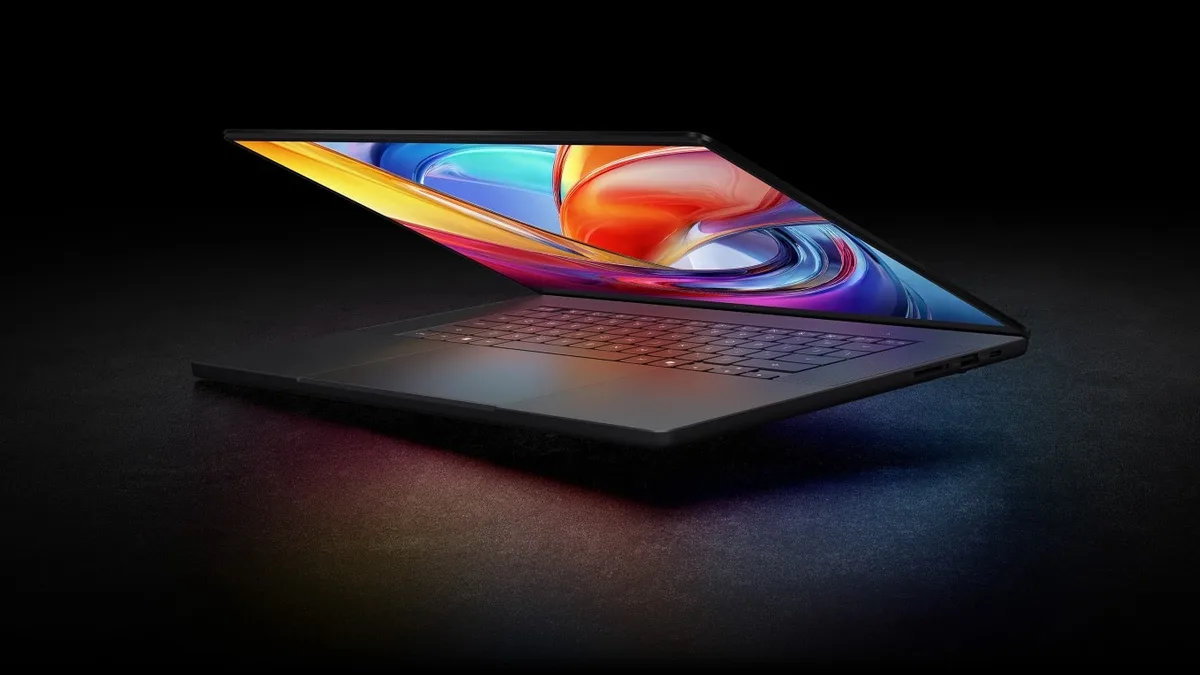
- Graphics: Notebookcheck and Windows Central found the GPU roughly matches an RTX 5070 laptop GPU in benchmarks.
- Everyday and creative work: fast in video export and rendering, and performance stays strong on battery, unlike most Windows laptops.
- Local AI: the 128 GB model shines here. PCWorld found it beat an RTX 5090 desktop on one memory-heavy AI job, simply because the model fit in memory.
- Versus Apple: early reviews agree the 16-inch MacBook Pro with M5 Max is still faster in most raw CPU and AI speed tests. The ProArt’s advantage is Windows plus Nvidia’s CUDA tools, which many AI developers depend on.
- Noise: under heavy load the fans get loud, especially on the top model.
Battery life
The battery is 99.9 Wh, the most allowed on a plane and up from 90 Wh on the previous P16. Asus doesn’t quote a battery-life figure. In reviewers’ real-world tests it lasted about 9.5 to 11 hours of light use. Running AI models drains it much faster: PCWorld saw it drop from 100% to 54% in about half an hour of AI work.
The catch: Windows on Arm
Because RTX Spark uses an Arm processor, older Windows apps built for Intel and AMD chips run through Microsoft’s Prism translation layer. Most work fine, but check your must-have apps first.
- Creative apps: Photoshop, After Effects and DaVinci Resolve Studio now run natively on Arm. Premiere Pro does too, but you need the latest version for full RTX Spark support. Lightroom Classic is still emulated.
- Games: games run through emulation. Fortnite, Counter-Strike 2, Marvel Rivals, Rocket League and Rust work. Call of Duty, PUBG, Valorant, League of Legends and EA titles with Javelin anti-cheat don’t work yet, and some others stutter. Reviewers agree: don’t buy it mainly for gaming.
- Accessories: older devices that need special Intel/AMD-only drivers, such as some printers, audio interfaces or capture cards, may not work.
ProArt P16 vs other RTX Spark laptops and the MacBook Pro
| Laptop | Starting US price | Best for |
|---|---|---|
| Asus ProArt P16 (RTX Spark) | $2,799.99 | Creators who want a 4K OLED and lots of ports |
| Microsoft Surface Laptop Ultra (15-inch) | $2,599 | The cheapest way into RTX Spark |
| Lenovo Yoga 9n 2-in-1 | $2,999.99 | A convertible with pen support |
| HP OmniBook Ultra 16 | $3,199.99 | Business users |
| Dell XPS 16 (Creator Edition) | $3,799 | Dell fans who want the XPS design |
| Apple MacBook Pro 16 (M5 Max) | $3,899 | The fastest all-round performance and longest battery life |
Windows Central called the ProArt P16 the best RTX Spark laptop it has tested so far. Not sure a Mac would suit you better? See which Mac to buy in 2026.
What reviewers say
- Notebookcheck (90%, Editor’s Choice): slim, powerful even on battery, an excellent OLED and great speakers. Cons: PWM flicker, app and game compatibility, and a mediocre webcam.
- Windows Central (4.5/5): the best RTX Spark laptop it has tested, praising the light build, thermals, ports, screen and touchpad. Cons: a slow SSD, battery life behind Apple, and the price.
- PCWorld: 128 GB makes very large local AI models practical, but the $7,000 top model is loud and drains its battery fast under AI work.
- TechRadar: a light, beautifully built laptop with a great screen and chip, but the price makes it a tough sell.
- Expert Reviews: powerful, efficient and relatively good value for the hardware, with the usual first-generation risks.
Price in India and the UK
- India: launched on 3 November 2026. The 64 GB / 1 TB model with the 4K OLED costs ₹4,99,990, and the 128 GB model about ₹6,49,990. A 48 GB model is “coming soon”. It’s sold on Amazon, Flipkart, Croma, Reliance Digital and Asus stores, with no-cost EMI from ₹13,750 a month until 30 November. The smaller ProArt P14 starts at ₹3,29,990.
- UK: from about £3,299.99 (32 GB), £3,899.99 (64 GB) and £5,999.99 (128 GB) at UK retailers.
Should you buy the Asus ProArt P16 (RTX Spark)?
- Buy it if you’re an AI developer, data scientist or creator who wants to run large AI models locally on Windows with Nvidia’s CUDA tools, and your main apps already run on Arm. Get at least 64 GB if AI is the point.
- Wait if you depend on Lightroom Classic, niche plugins or specific hardware drivers, or if you’d rather let the first-generation bugs get ironed out. App support is improving month by month.
- Skip it if you mainly game, or if you don’t need local AI. A regular RTX gaming or creator laptop costs less, and a MacBook Pro is faster with much longer battery life.
FAQ
How much does the Asus ProArt P16 RTX Spark cost? In the US it starts at $2,799.99 (24 GB, 512 GB) and goes up to $6,999.99 (128 GB, 2 TB). In India it starts at ₹4,99,990 for the 64 GB model.
What is Nvidia RTX Spark? It’s an Arm-based chip from Nvidia, co-designed with MediaTek, that combines a CPU, a Blackwell GPU and up to 128 GB of shared memory. It’s designed to run AI models locally on Windows laptops.
Can the ProArt P16 RTX Spark play games? Some. Games run through emulation, so titles like Fortnite and Counter-Strike 2 work, but Call of Duty, PUBG, Valorant and League of Legends don’t run yet. It isn’t a gaming laptop.
Does Adobe software work on it? Photoshop, After Effects and Premiere Pro run natively on Arm (use the latest versions), and so does DaVinci Resolve Studio. Lightroom Classic still runs through emulation.
How long does the battery last? Asus doesn’t quote a figure. Reviewers measured roughly 9.5 to 11 hours of light use from its 99.9 Wh battery, but much less when running AI models.
Is it available in India? Yes. It launched in India on 3 November 2026 from ₹4,99,990, through Amazon, Flipkart, Croma, Reliance Digital and Asus stores.
Watch: this guide in 4 minutes
More short videos
Sources & further reading
- Asus — ProArt P16 (H7607) tech specs
- Asus — ProArt P16 (H7607) product page
- Asus — ProArt P16 (H7607) where to buy (US)
- Asus — ProArt laptops with Nvidia RTX Spark press release (7 Oct 2026)
- Nvidia — RTX Spark specifications
- Nvidia — RTX Spark announcement with Microsoft (31 May 2026)
- Nvidia — RTX Spark PCs available today (16 Oct 2026)
- MediaTek — Nvidia RTX Spark
- Notebookcheck — Asus ProArt P16 RTX Spark review
- Windows Central — Asus ProArt P16 RTX Spark review
- Expert Reviews — Asus ProArt P16 RTX Spark review
- PCWorld — Asus ProArt P16 review
- PCWorld — All the RTX Spark laptops available at launch
- TechRadar — Asus ProArt P16 RTX Spark review
- Puget Systems — State of Arm support for creative apps
- Digital Terminal — Asus launches ProArt P16 and P14 in India
Keep reading
Apple HomeView reviews are in: is the $299 (₹39,900) smart display worth it?
Apple HomeView is on sale. Reviewers love the hardware but flag missing apps and an unfinished Siri. Who should buy it, who should wait, and the real cost in India.
Read more →
NIIMBOT B1 label maker: the cheap gadget that's actually useful
The NIIMBOT B1 prints 2-inch labels from your phone with no ink. What it's good for, the catches (including the label rolls) and whether to buy it.
Read more →
OBSBOT Meet Flip: is the $119 foldable 4K webcam worth it?
The OBSBOT Meet Flip is a tiny 4K webcam that folds shut over its own lens. What it does well, where it falls short and who should buy it.
Read more →