Apple smart glasses: release date, features, and why Siri is the whole story
Apple's first smart glasses reportedly have no screen and no apps of their own: Siri does everything through your iPhone. Release date, features, price, and how they compare with Meta and Google.
Disclosure: This article may contain affiliate links. If you buy through them we may earn a small commission at no extra cost to you. It never influences our editorial opinion. As an Amazon Associate, GeekyGoo earns from qualifying purchases.
Apple’s first smart glasses are reportedly almost ready as hardware. What’s holding them back is Siri. According to Bloomberg’s Mark Gurman, the glasses have no screen and no apps of their own. You talk to Siri, and Siri reaches into the apps on your iPhone to book the table, call the cab or reorder your coffee.
That makes Siri the whole product. And on 3 November, Apple quietly took the step that makes it possible: it opened Siri AI to every app developer. Here’s what’s been reported about the glasses, what Apple has actually confirmed, when they might launch, and how they stack up against Meta’s and Google’s glasses you can buy today.
Apple hasn’t announced smart glasses. Everything about the glasses here comes from reporting, mostly by Bloomberg’s Mark Gurman, and could change. We say clearly which parts Apple has confirmed.
Apple smart glasses at a glance
| What we know | Status | |
|---|---|---|
| Codename | N50 | Reported |
| Display | None. Cameras, microphones and speakers only | Reported |
| Apps | None on the glasses. Siri uses the apps on your iPhone | Reported |
| Works with | A recent iPhone. No Android | Reported |
| Software | A pared-down version of visionOS 28 | Reported |
| Chip | Derived from Apple Watch chips | Reported |
| Unveil | WWDC, June 2027 | Reported target, now uncertain |
| On sale | By the end of 2027 | Reported target, now uncertain |
| Price | Unknown | Nobody credible has reported one |
| Siri opened to all apps | Yes, from 3 Nov 2026 (iOS 27.3 beta) | Confirmed by Apple |
No screen: “AirPods for your face”
Forget the sci-fi heads-up display. Apple’s first glasses are reportedly closer to a pair of AirPods built into a frame. Gurman says Apple staff describe the idea as “AirPods for your face”: cameras to see what you see, microphones to hear you, speakers to talk back, and Siri in charge of everything.
That puts them in the same category as Meta’s best-selling Ray-Ban glasses, not Meta’s pricier Ray-Ban Display or Apple’s own Vision Pro. Apple’s glasses with a built-in display are expected later. Estimates range from 2028 to 2029 depending on the source.
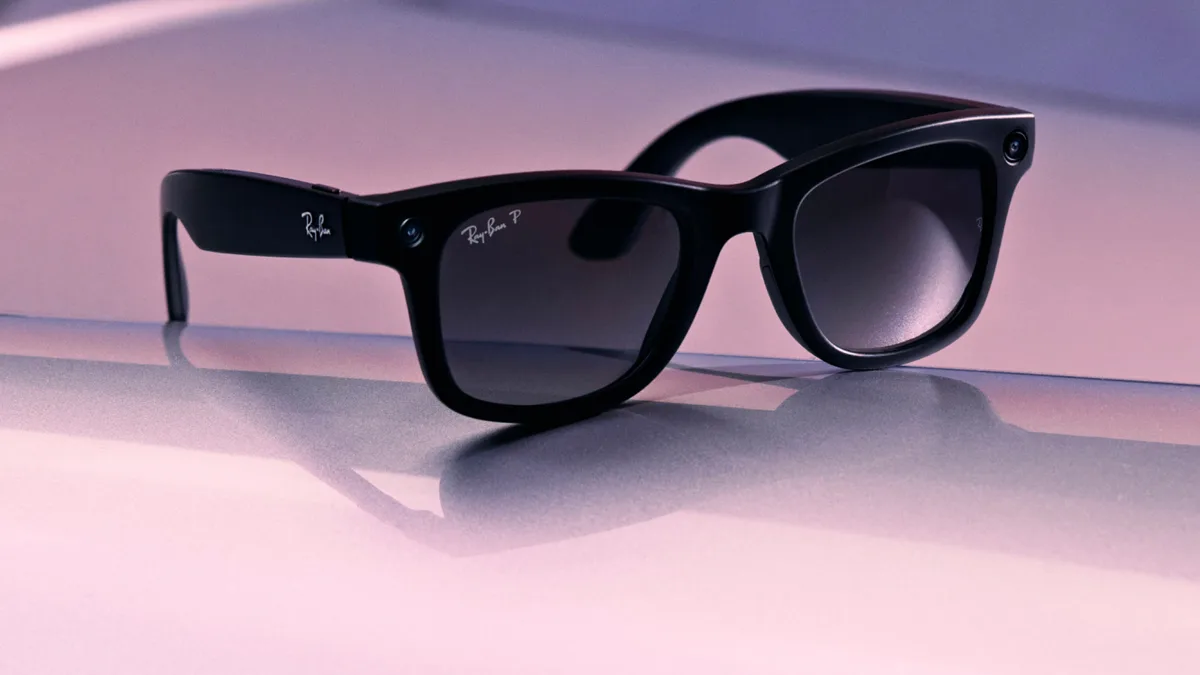
According to the 15 November report, the prototypes are slightly thinner than Meta’s Ray-Ban Gen 2. Earlier reports said Apple is testing at least four frame styles (large and slim rectangles, large and small ovals) in acetate, in colours including black, ocean blue and light brown.
Your apps stay on your iPhone, and Siri does the work
This is the most interesting part of the report. Apple isn’t planning an App Store for the glasses. Instead:
- The glasses are the front end. They capture your voice and what the cameras see, and send requests to Siri.
- The iPhone does the heavy lifting. It supplies the processing power and memory the slim frames don’t have, and it’s where your apps live.
- Apps work through Siri. If an app tells Siri what it can do, you can use it hands-free from the glasses. Gurman’s examples include ride-hailing with Uber or Lyft, booking a table on OpenTable, ordering from Starbucks, shopping on Amazon and buying movie tickets on Fandango.
- If an app doesn’t support Siri, the glasses can’t use it. There’s no fallback screen to tap.
It’s a smart way round the biggest problem with smart glasses: there’s no room for a powerful chip or a big battery in a frame light enough to wear all day. It also means the glasses get better whenever your apps do, without anyone building a “glasses app”.
Apple has already opened Siri to every app
The glasses aren’t announced, but the plumbing is. On 3 November 2026, Apple told developers that any app can now plug its content and actions into Siri AI using App Intents, starting with the iOS 27.3 betas. This part is confirmed by Apple:
- App actions: apps can let Siri do things inside them, like “book a table for two at eight”.
- Skills: a new feature that teaches Siri to chain several actions into one request.
- Timing: Apple says the feature reaches customers “in a few months”, and App Store submissions open “in the spring”.
- Apple’s own apps first: Calendar, Files, Finder, Journal, Mail, Maps, Messages, Music, Notes, Photos, Preview, Reminders, Safari, Shortcuts and Weather.
Gurman reports that better Siri control of Apple’s own apps arrives with iOS 27.3 in December. That gives developers months to get their apps ready before the glasses’ reported unveiling in June 2027. If you’ve used Apple’s HomeView, the $299 Siri-first home device that went on sale on 13 November, you’ve seen where this is heading: Siri as the main way you use Apple’s products, rather than a sideshow.
What you could do with Apple’s glasses
Based on the reported features, these are the kinds of things Apple is aiming for:
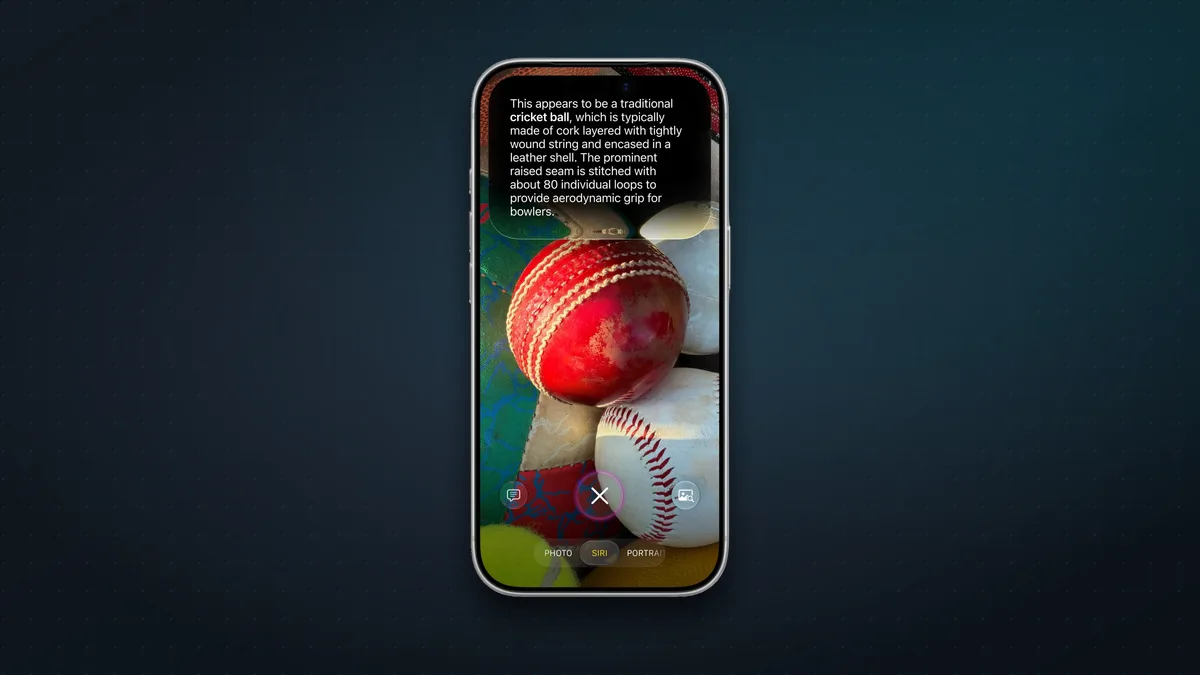
- Ask about what you see. Siri uses the cameras to identify a building, a plant or a product, much like the Camera app’s Siri mode does today.
- Cook with what you’ve got. Look in the fridge and ask for a recipe that uses those ingredients.
- Get around. Turn-by-turn directions spoken in your ear.
- Translate. Signs you’re looking at, and people you’re talking to.
- Stay in touch. Calls, FaceTime audio, messages, notifications, calendar and reminders.
- Listen. Music and podcasts. Apple employees reportedly describe the audio quality as “industry-leading”.
- Control your home. Lights, locks and other smart home gear through Siri.
- Get things done in apps. Rides, reservations, orders and tickets, as long as the app supports Siri.
Hardware details from the prototypes
Gurman says much of the hardware is “largely finalized”. Here’s what’s been reported about the prototypes. Any of it could still change:
- Software: a pared-down version of visionOS 28, the same family of software as Vision Pro.
- Chip: derived from Apple Watch chips, built for low power rather than speed.
- Wi-Fi: some features, such as audio, can keep working over Wi-Fi when your iPhone isn’t nearby. They aren’t standalone, though.
- Charging: a tiny magnetic three-pin connector, about the size of a Tic Tac, at the tip of the left arm, so you can keep wearing the glasses while they charge. It’s not clear whether this design will ship.
- Cameras: flush, oval camera openings on some test units, plus a light on the front that shows when the glasses are in use or charging.
- Privacy: Apple reportedly treats privacy as “priority No. 1”. In July, Bloomberg reported that Apple had even tested prototypes with no camera, or with cameras used only for sensing. The final camera setup isn’t settled.
What hasn’t been reported by anyone credible: battery life, weight, storage, the final name or the price.
Release date: WWDC 2027, if Siri is ready
The current target, according to Bloomberg, is to unveil the glasses at WWDC in June 2027 and ship them before the end of 2027. But Gurman added a warning on 15 November: the hardware is largely done, yet the “software is running behind”, leaving both targets uncertain.
The date has already moved several times:
| When reported | Reported plan |
|---|---|
| May 2025 | Release by the end of 2026 |
| October 2025 | Unveil as soon as 2026, ship in 2027 |
| May 2026 | Slips to the end of 2027 |
| July 2026 | Unveil at WWDC (June 2027), ship by the end of 2027 |
| November 2026 | Same target, but software is behind |
Analyst Ming-Chi Kuo said in 2025 that mass production would start in the second quarter of 2027, with 3 to 5 million units that year. That roughly fits a late-2027 launch.
Price: nobody knows yet
You may see $499 quoted online. That figure goes back to a leak from 2020, long before this product existed in its current form. Bloomberg hasn’t reported a price. For context, Ray-Ban Meta Gen 3 glasses cost $449, and Google’s new glasses start at $395, so Apple will probably want to land somewhere near that range. That’s our guess, not a report.
Which iPhones, and will they work in India or Europe?
Apple hasn’t said, and reports only mention “a recent iPhone”. Here’s our analysis of what’s likely. Treat it as informed guesswork:
- Siri AI needs an iPhone 15 Pro or newer (any iPhone 16 or later also works). If the glasses rely on your iPhone’s Siri AI, expect similar requirements.
- Siri AI isn’t available in the EU on iPhone right now, or to users under 13. If that’s still true in 2027, it could hold the glasses back in Europe.
- India is an open question. HomeView, Apple’s other Siri-first device, did launch in India, which is a good sign. Nobody has reported launch countries for the glasses.
- Usage limits. Apple’s fine print says Siri AI’s server features have daily limits, with paid “expanded access” coming later. That could matter for a device that runs entirely on Siri.
Built with help from Google’s Gemini
There’s an irony here. Apple says the models behind Siri AI are “custom-built in collaboration with Google and its Gemini models”. So the brains of Apple’s glasses will owe something to Google, which is launching its own glasses next month.
Apple vs Meta vs Google: the smart glasses you can buy now
Apple is late to a market that’s already big. Meta’s partner EssilorLuxottica sold more than 7 million Meta AI glasses in 2025, more than triple the year before.
| Glasses | US price | India price | Display | Works with |
|---|---|---|---|---|
| Apple glasses (N50) | Unknown | Unknown | No | iPhone only (reported) |
| Ray-Ban Meta (Gen 3) | From $449 | From ₹44,300 | No | iPhone and Android |
| Ray-Ban Meta (Gen 2) | $379 | Launched at ₹39,900 | No | iPhone and Android |
| Oakley Meta HSTN | From $399 | Launched at ₹41,800 | No | iPhone and Android |
| Meta Ray-Ban Display | $799 with Neural Band | Not sold | Yes, one lens | iPhone and Android |
| Google/Samsung Intelligent Eyewear | From $395 (on sale 10 Dec) | Not sold | No | Android and iPhone 13 Pro or later |
| Apple Vision Pro (M5) | $3,499 | Not officially sold | Headset | Standalone |
Prices are list prices from Meta, Google and Apple, and Amazon India on 16 November 2026. Retail prices change often.

A few things stand out:
- Google’s glasses work with iPhones. Apple’s reportedly won’t work with Android. That’s typical Apple, but it shrinks the audience.
- Meta has a head start on apps. Meta AI already handles music, messages, photos and payments (UPI in India) on its glasses. Apple’s bet is that Siri plus every iPhone app will beat that.
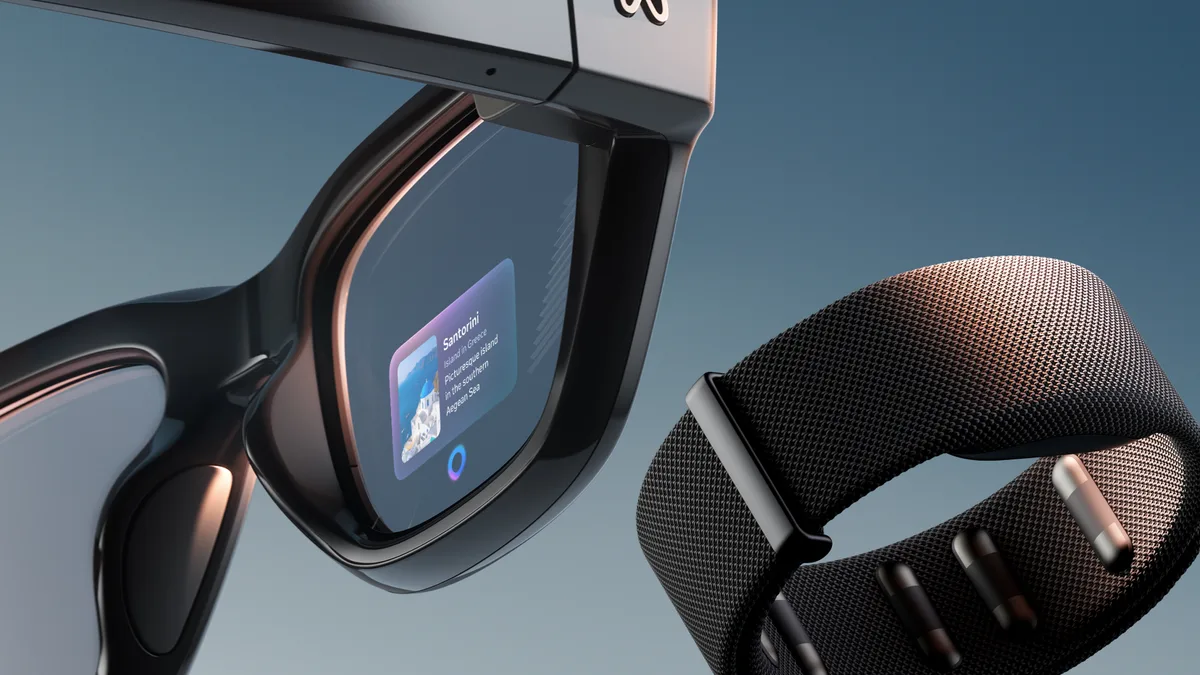
- Meta already sells a display. If you want to see information, not just hear it, Meta Ray-Ban Display is the only mainstream option. Apple’s display glasses are years away.
Should you wait for Apple glasses or buy Ray-Ban Meta now?
- Buy Ray-Ban Meta now if you want camera glasses for photos, music, calls and an AI assistant today. They’re mature, they come in lots of styles, and they’re sold in India. Gen 3 brings a 12 MP camera, 3K video and up to 9 hours of battery.
- Wait for Apple if you live in Apple’s world and want glasses that work with your iPhone apps through Siri. Just know you’re waiting until late 2027 at the earliest, and the date could slip again.
- Watch Google if you’d like an alternative that works with both iPhone and Android. It goes on sale in the US on 10 December.
Whichever you pick, Apple’s approach is worth watching. If Siri can really reach into every app, glasses become a lot more useful than a camera and a speaker. If it can’t, Apple’s glasses will be late and limited.
FAQ
When will Apple’s smart glasses come out? According to Bloomberg, Apple is aiming to unveil them at WWDC in June 2027 and ship them before the end of 2027. The hardware is reportedly mostly finished, but the software is behind schedule, so that date could slip.
Will Apple’s glasses have a display? Not the first model, according to every credible report. They reportedly have cameras, microphones and speakers, and you use them by talking to Siri. Apple glasses with a display are expected around 2028 to 2029.
Do Apple’s smart glasses run apps? Reportedly not directly. Your apps stay on your iPhone, and Siri uses them on your behalf, for example to book a ride or a table. Apps need to support Siri through Apple’s App Intents framework, which Apple opened to all developers on 3 November 2026.
How much will Apple’s smart glasses cost? Nobody knows yet. Bloomberg hasn’t reported a price, and the often-quoted $499 comes from a 2020 leak. For comparison, Ray-Ban Meta Gen 3 starts at $449.
Will Apple’s glasses work with Android? No, according to Bloomberg. They reportedly need a recent iPhone.
Will Apple’s smart glasses launch in India? There’s no report on launch countries yet. Apple’s Siri-first HomeView did launch in India, which is a positive sign, but Apple hasn’t announced the glasses at all.
What is the codename of Apple’s smart glasses? Bloomberg reports the codename is N50.
Watch: this guide in 4 minutes
More short videos
Sources & further reading
- Bloomberg — Mark Gurman, Power On newsletter (15 Nov 2026)
- Mark Gurman on X — glasses hardware and software status (15 Nov 2026)
- MacRumors — Apple smart glasses hinge on Siri (15 Nov 2026)
- iClarified — Apple smart glasses prototypes reportedly run visionOS 28
- Apple Developer — Siri AI is now open to all developers (3 Nov 2026)
- Apple Developer — Siri AI developer preview documentation
- Apple Newsroom — Siri AI is here (14 Sep 2026)
- Apple Newsroom — Siri AI and iOS 27 unveiled at WWDC26 (8 Jun 2026)
- Bloomberg — Apple shelves Vision headset revamp to prioritize AI glasses (1 Oct 2025)
- Bloomberg — Apple glasses may debut at WWDC 2027 (26 Jul 2026)
- 9to5Mac — Apple glasses launching late 2027 (31 May 2026)
- 9to5Mac — Apple exploring four different glasses styles (12 Apr 2026)
- Meta — Introducing Ray-Ban Meta Audio glasses, new styles and more (Sep 2026)
- Meta — Meta Ray-Ban Display and Neural Band
- Google — Intelligent Eyewear collections open for pre-order (12 Nov 2026)
- UploadVR — Meta and EssilorLuxottica sold 7 million smart glasses in 2025
Keep reading
How to use Gemini on Apple CarPlay: setup, what to ask, and the catches
Google's Gemini app now runs on Apple CarPlay. How to set it up in two minutes, what to ask it on the road, what it can't do, and what works in India.
Read more →
iPhone 18 Pro Max battery life: how long it really lasts, and how it beats Android
Apple says 45 hours. Independent lab tests say about 19 hours of mixed use, ahead of the Galaxy S26 Ultra and Pixel 11 Pro XL. The real numbers explained.
Read more →
5 iPhone security settings to turn on now: stop thieves, spam calls and scammers
Five iPhone settings that stop thieves, spam calls and scammers: Stolen Device Protection, iOS 27's Impersonation Risk Detection, call screening and more.
Read more →