Violoop explained: the plug-in AI box that uses your computer for you. Should you back it?
Violoop is a $3.4m Kickstarter hit: a small box that reads your screen and works your mouse and keyboard. How it works, what it costs and whether to back it.

Most AI assistants tell you how to do something. Violoop wants to do it for you, by using your computer the way you do: looking at the screen and working the keyboard and mouse. It’s a small box from Hong Kong start-up BVIO, and it has just raised $3.42 million from 5,844 backers on Kickstarter, making it one of the most talked-about gadgets of the autumn.
Our verdict: it’s a genuinely interesting idea, but it hasn’t shipped and nobody has reviewed a finished unit. Unless you love trying new tech first, wait for the reviews.
Violoop isn’t on sale yet, so this explainer is based on the Kickstarter campaign, BVIO’s own material, and early hands-on coverage from Tom’s Guide and New Atlas. Funding figures were checked on 5 November 2026.
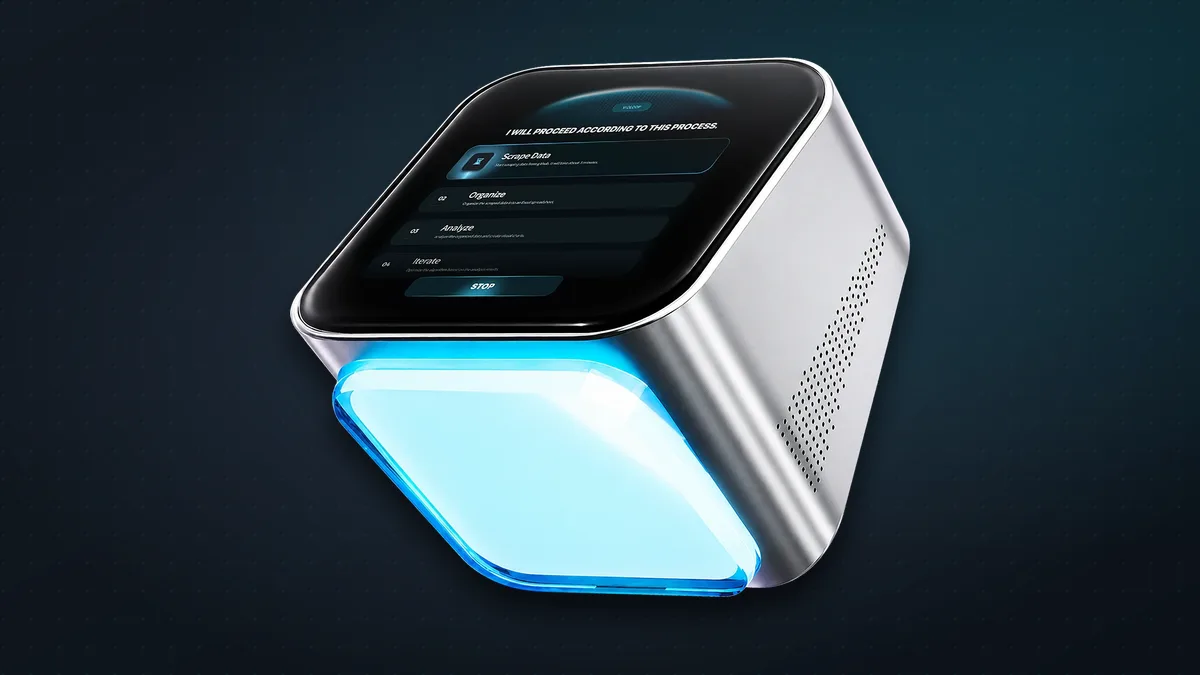
How Violoop works
Violoop sits next to your laptop or PC and connects in one of two ways:
- One cable: a full-featured USB-C connection carries both the picture and the controls, if your computer supports video over USB-C.
- Two cables: HDMI sends it your screen, and USB lets it act as a keyboard and mouse.
Because it sees the screen and types like a person, it doesn’t need special connections to each app. You tell it what you want, such as “pull this week’s sales figures into a report and draft an email about them”, and it moves the cursor, clicks and types to get there, showing what it’s doing on its own little screen. BVIO says it works with Windows, macOS and Linux, and has been trained on more than 200 applications. It has its own power supply, so it doesn’t drain your laptop.
What’s inside
- Its own AI chip. An RK3576 processor with an AI accelerator rated at up to 26 TOPS, 8GB of memory and 128GB of storage, according to China-Gadgets’ breakdown of the specs.
- A local AI model. It runs a compact model, Qwen 8B, on the device at up to 53 tokens per second, and keeps a “memory” of how you work, stored locally.
- Optional cloud AI. For harder tasks it can use models such as Claude, ChatGPT or Gemini, with your own paid API key or BVIO’s own token service, whose price hasn’t been published.
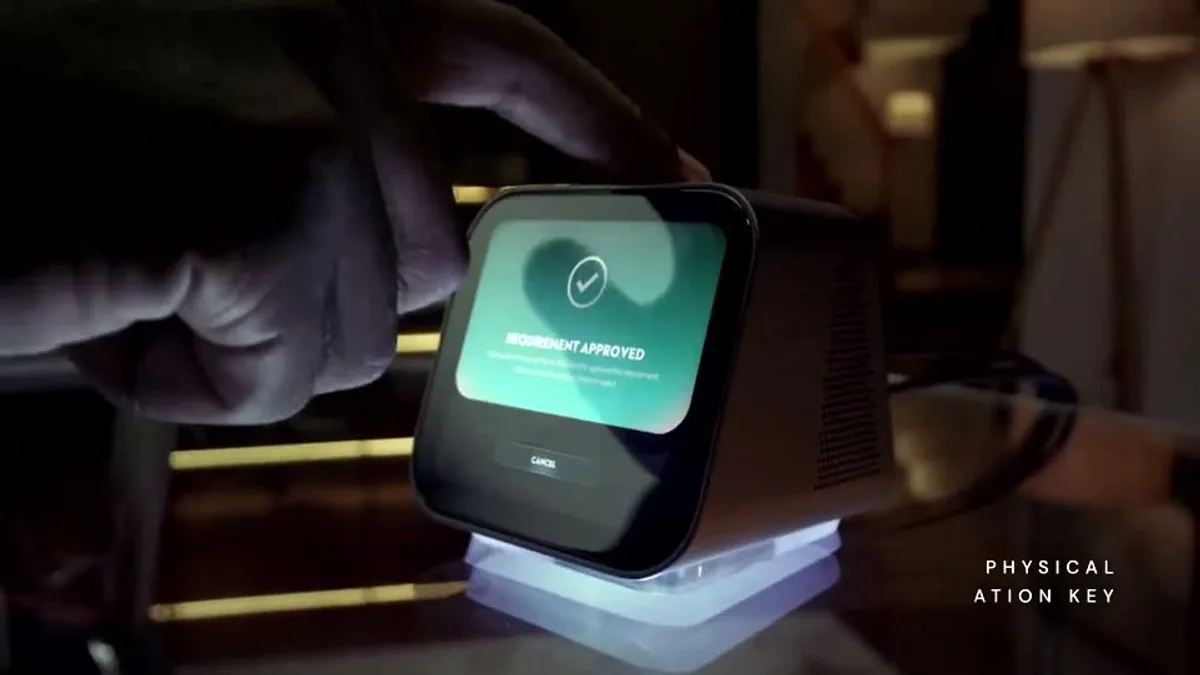
- A separate security chip. A dedicated STM32H563 chip holds back sensitive actions until you approve them with a physical button on the box or on your phone.
Price and delivery
| Early-bird price | $399 (sold out) |
| Late pledge now | About $500 (HK$3,914) |
| Expected retail | $699, per BVIO’s launch announcement; Tom’s Guide reported $799 |
| Estimated delivery | December 2026 |
| Running costs | None for the local model; cloud AI costs extra |
What early coverage says
Tom’s Guide saw Violoop at IFA in September and liked the core idea: because the box does much of the AI work itself, it could bring capable AI agents to older laptops that can’t run them well. New Atlas described a device that watches how you work in order to automate it, which neatly sums up both the appeal and the unease.
The concerns
- It’s unproven. No one outside BVIO has used a finished, shipping unit. The company itself warns that compatibility will vary across operating systems, display settings and apps.
- It can see and do everything you can. That’s the point, but it’s also a serious security decision. China-Gadgets notes that malicious content on screen could, in theory, try to trick the AI; the separate approval chip is a strong safeguard but not a guarantee.
- Work computers are off-limits without permission. A device that reads your screen and acts as a keyboard is exactly what IT departments block. Ask first.
- The local model is small. An 8-billion-parameter model is fine for routine steps, but for complex work you’ll likely lean on cloud models, which add cost.
- It’s Kickstarter. Dates can slip, and Kickstarter itself warns that rewards aren’t guaranteed. An earlier estimate was November; it’s now December.
Should you back it?
Back it if you enjoy being an early adopter, you have repetitive computer tasks to automate, and you’re comfortable treating the money as a bet rather than a purchase.
Wait if you want something that definitely works. Reviews of shipping units should appear after deliveries begin, and the price may well settle below the $699 retail figure.
Curious about AI agents now? You can try software agents without buying hardware: see our explainers on Claude Duet, Claude connectors and MCP.
Buying in India
Violoop’s Kickstarter rewards ship worldwide. Shipping is usually charged separately, and customs duty and GST may apply when it arrives, so budget for more than the pledge price.
The bottom line
Violoop is one of the boldest gadget ideas of the year: an AI that doesn’t just answer questions but actually does the clicking. It might be brilliant, but no one can tell you that yet. For most people, the smart move is to let the first backers find out, then decide.
See how Violoop compares with 15 other viral gadgets in our fact-check of 16 cool new gadgets.
Sources & further reading
- Kickstarter — Violoop: plug-in AI for your computer
- Violoop — official site
- Tom's Guide — Violoop hands-on at IFA 2026
- New Atlas — AI assistant watches you work to learn and automate tasks
- AndroidGuys — BVIO Violoop launches on Kickstarter
- PC Guide — Violoop on Kickstarter with $399 pre-launch price
- China-Gadgets — Violoop on Kickstarter: how safe is it? (German)
Keep reading

Plaud Note Pro: the credit-card AI recorder that writes your meeting notes
A credit-card-thin AI recorder that transcribes and summarises your meetings and calls. What the Plaud Note Pro does, what it costs and who should buy one.
Read more →
The best Claude connectors in 2026: 12 worth turning on (and which work in India)
Claude connectors link Gmail, Spotify, Zomato, Notion and 1,000+ more apps to Claude. The 12 worth adding, what each can and can't do, and how to stay safe.
Read more →
Logitech MX Master 3S vs MX Master 4: which productivity mouse should you buy?
Logitech's MX Master 3S is now cheaper than ever, and the MX Master 4 adds haptics. Features, prices in the US and India, the catches, and which one to buy.
Read more →