TextNow Yello: a $150 kids' phone with a $20 plan. Is it the right first phone?
TextNow's Yello is a locked-down Moto G Play for kids aged 5–12, with parent-approved contacts and a $19.99 plan. What it does, the catches and alternatives.
Disclosure: This article may contain affiliate links. If you buy through them we may earn a small commission at no extra cost to you. It never influences our editorial opinion.
When is a child ready for a phone? For many parents, the honest answer is “ready for some phone, but not a smartphone with the whole internet on it”. That’s the gap Yello is built for. Launched by the US budget carrier TextNow on 20 October 2026, it’s a $149.99 phone with a $19.99-a-month plan, designed for kids aged 5 to 12. Kids can call and text only the people their parents approve, and there’s no browser, no app store and no social media.
It’s a smart idea with some real catches. Here’s what Yello does, what to watch out for, and how it compares with the other first-phone options, including what parents in India can use instead.
We haven’t tested Yello ourselves. This guide is based on TextNow’s own pages and help centre, Motorola’s specifications and independent coverage. Where TextNow’s marketing and help centre disagree, we’ve gone with the help centre and said so.
What Yello is
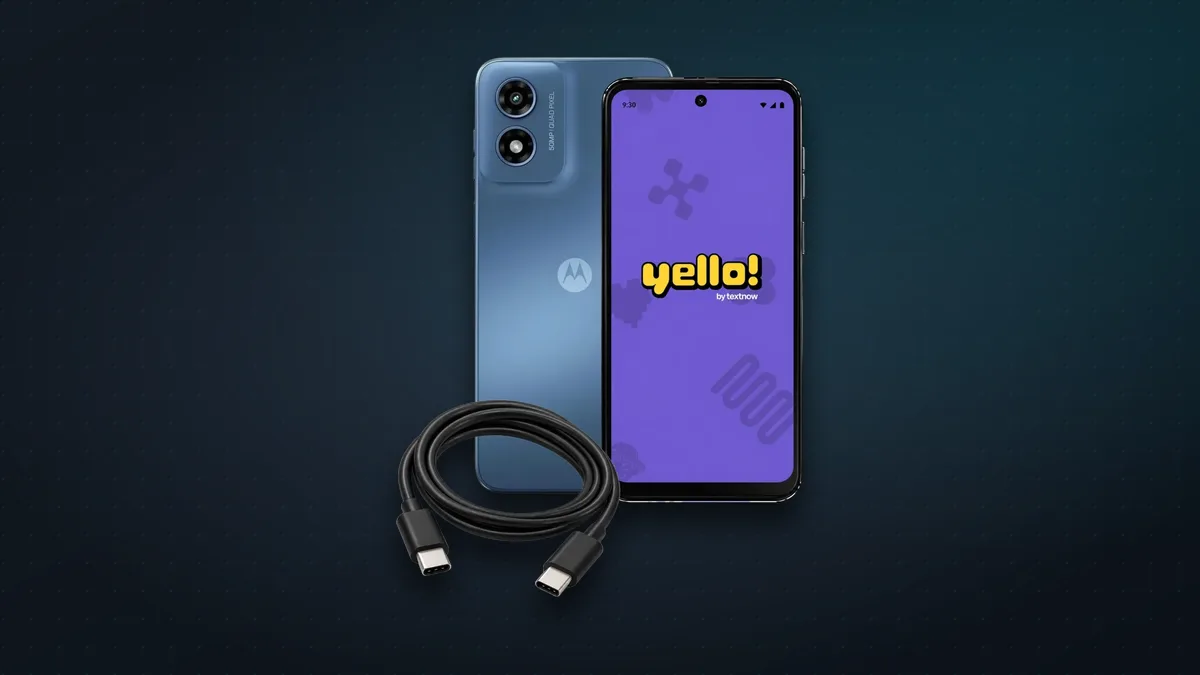
Yello is a Motorola Moto G Play (2024) running TextNow’s locked-down software. It’s managed remotely, so the restrictions can’t be switched off or removed, and it can’t be turned into a regular smartphone.
What your child can do:
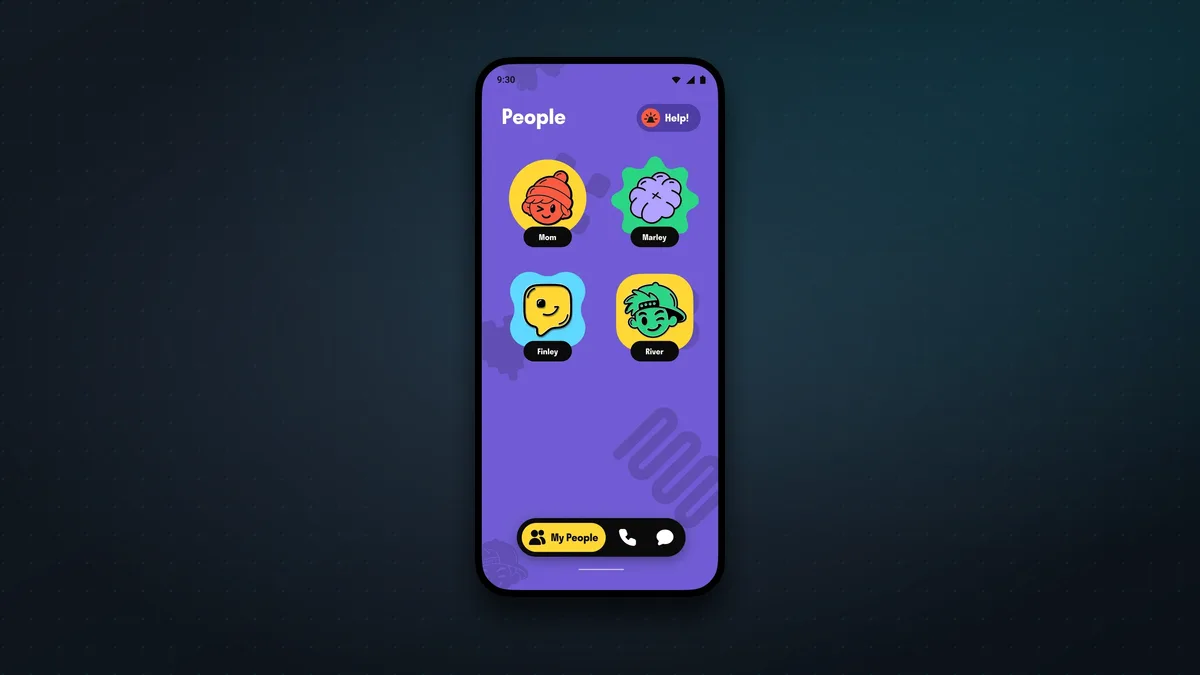
- Call and text only parent-approved contacts, in both directions, up to 50 per child. Calls and texts from anyone else are blocked before they reach the phone.
- Pick contacts from a home screen of big, colourful tiles, with a Help! button.
- Send short voice messages, and join group chats, but only if every member is approved (kids can’t start a group themselves).
- Take photos and videos, which can be shared only one-to-one with contacts marked as a parent or guardian.
- Use a calculator, weather app, clock with alarms and a few simple games that parents can switch on or off.
- Call 911 at any time, even if the bill is unpaid. Tapping 911 also emails parents the phone’s last location and battery level.
What’s not there:
- No web browser, app store or app installs.
- No social media, ads or in-app purchases.
- No email. Website links don’t work in messages in either direction.
For parents:
- A web-based Parent Portal (no app), where you manage contacts and games, see the phone’s location, battery and signal, and handle billing.
- TextNow says it doesn’t sell children’s data or show ads, and cites the US children’s privacy law (COPPA).
The hardware
The Moto G Play (2024) is a basic but sensible kids’ phone:
- 6.5-inch HD+ screen (90Hz)
- Snapdragon 680 chip, 4GB RAM, 64GB storage plus a microSD slot
- 50MP rear camera and 8MP selfie camera
- 5,000mAh battery, with 15W USB-C charging
- Water-repellent, so it survives a splash, but it’s not waterproof (no IP rating)
- 4G only, in Sapphire Blue
In the box: the phone, a USB-C cable, stickers and a quick-start guide. A case and charger cost extra as a “Starter Kit”.
What it costs
| Price | |
|---|---|
| Phone | $149.99 new, or $119.99 refurbished |
| Plan | $19.99 a month: unlimited calls and texts with approved contacts, all the data the phone needs, the Parent Portal and location |
| Contract | None. Cancel any time, and the phone is yours |
| First year | About $390 (new phone) or $360 (refurbished) |
Each extra child needs another phone and plan. Yello works only in the US: it can’t call or text abroad and doesn’t roam.
The catches
- Motorola’s security updates end in January 2027. Motorola’s own update schedule says the Moto G Play (2024) gets security patches only until then, about three months after Yello’s launch. TextNow says it manages the phone’s software, but hasn’t said how long Yello phones will stay protected. For a phone you might want to last two or three years, that’s the biggest question mark.
- Location isn’t live. TextNow’s marketing says “live location”, but its own help centre says the phone updates its location about every five minutes, with no location history and no alerts when your child arrives somewhere or leaves (yet).
- Some basics are missing, for now. There’s no voicemail yet and no message reactions. TextNow says new features are coming and that it’s building them with early customers.
- TextNow’s pages disagree. Its comparison blog claims voicemail, says kids can’t send photos, and says a case is included. The help centre says none of those is true. Treat the help centre as the accurate version.
- It doesn’t grow with your child. Because the lockdown can’t be removed, Yello can’t become a “normal” phone when your child is older. Other kids’ phones let you unlock apps and features over time.
- It’s 2024 hardware at a 2024 price. The same Moto G Play costs $149.99 unlocked on Amazon. PhoneArena felt that was a tough sell for a two-year-old phone. What you’re paying for is the software, the safety controls and the cheap plan.
- It’s 4G only, although TextNow describes its network as 5G, and TextNow doesn’t say which carrier it runs on.
How Yello compares with other first phones (US)
| Option | Upfront | Monthly | What it allows | Best for |
|---|---|---|---|---|
| Yello | $149.99 | $19.99, no contract | Approved contacts only; no apps or browser | Ages 5–12 who just need to reach family |
| AT&T amiGO Jr | $279.99 (or monthly) | Needs an AT&T postpaid line | Approved contacts, parent-approved apps and sites, real-time location, School Mode; 5G | Families already on AT&T |
| Gabb Phone 4 | $249.99 on Gabb’s site | From $29.99 | No internet or social; a curated set of apps and music | Tweens who need a few vetted apps |
| Bark Phone | Phone paid monthly | From about $29 | Starts with calls and texts; higher tiers add apps and web with Bark’s monitoring | Unlocking more as your child grows |
| Pinwheel | $119–$299 | $29.99, or $17.99 for the controls on your own carrier | Parent-approved apps, contact safelist, schedules, arrive/leave alerts | Staged app access, co-parenting families |
| Troomi | Galaxy A17 5G, paid monthly | $24.95–$34.95 | Approved contacts, AI message monitoring, filtered browser on the top plan | Older kids who’ll need a safe browser |
| Kids’ smartwatch (Verizon Gizmo Watch 4, T-Mobile SyncUP Kids Watch 2) | About $175–180 | About $10–12 | Calls and texts with approved contacts, GPS; no browser | Ages 5–9, or a step before a phone |
| DIY: cheap phone + Google Family Link or Apple Screen Time | From ~$150 | Any prepaid plan | Whatever you allow: app approval, screen-time limits, location, and (on Android 14) approved-contacts-only calling | Tech-confident parents who want flexibility |
Prices from each provider’s site at the time of writing; plans and promotions change often.
A note on the DIY route: you can buy the very same Moto G Play (2024) unlocked and use Google Family Link with any cheap prepaid plan. Family Link can restrict calls and texts to contacts you add, but only on Android 14 and only in Google’s own Phone and Messages apps. You’d need to block other messaging apps separately. It’s more flexible, but more work, and it relies on settings you manage yourself rather than a lockdown that can’t be removed.
Which first phone is right for your child?
- Under 9, and mainly needs to reach you: a kids’ smartwatch. There’s no screen-time battle, and it has GPS.
- Ages 6–12, and needs to call and text family and a few friends: Yello is the simplest and cheapest way to do exactly that, with no contract. Go in knowing about the security-update question.
- Tweens who need a few apps (music, school, maps): Gabb, Pinwheel or Bark, which let you open things up gradually.
- Already on AT&T, and want a newer 5G phone: amiGO Jr.
- You’re comfortable managing settings yourself: a budget Android or hand-me-down iPhone with Family Link or Screen Time.
In India? What to use instead
Yello isn’t available in India; it works only on a US network and ships only within the US. Indian parents have good, cheaper options:
- A budget Android phone with Google Family Link. Family Link has been available in India since 2018, and lets you approve apps, set screen-time limits and see your child’s location.
- A 4G kids’ smartwatch with a SIM, for younger children:
- imoo Kids Phone Watch Z1 (about ₹8,990): 4G video and voice calls, GPS, SOS and waterproofing, rated 4.3 stars from 2,800+ Amazon India ratings.
- Noise Junior Explorer 2 (about ₹6,499): 4G calls and video calls, live location with geofencing, SOS and IP68.
- A cheap prepaid plan. For example, Jio’s ₹189 plan gives 28 days of unlimited calls, 2GB of data and 300 SMS. Airtel has similar plans from about ₹199, which vary by circle. SIMs in India are registered to an adult, so the connection will be in your name.
The bottom line
Yello gets the idea of a first phone right. It’s simple, it lets kids reach only the people you trust, it has no internet rabbit holes, and at $19.99 a month with no contract it’s cheap to try. But it’s built on a 2024 phone whose Motorola security support ends in early 2027, its location tracking isn’t truly live, and it can’t grow up with your child. If you want the simplest possible “call Mum, text Grandpa” phone for a younger child, it’s worth a look, but ask TextNow how long it will keep the phone updated before you buy.
Looking at phones for yourself? See Apple vs Android in 2026 and which iPhone to buy.
Sources & further reading
- TextNow — Yello
- TextNow — Yello launch press release (PR Newswire)
- Yello Help Center — Location
- Yello Help Center — Messaging
- Yello Help Center — Coverage and data
- Motorola — Moto G Play (2024) specifications
- Motorola — Software security update schedule
- PhoneArena — TextNow unveils Yello, a budget kids phone
- Techlicious — TextNow Yello joins a growing kids phone market
- AT&T — amiGO Jr Phone
- Gabb — Gabb Phone
- Pinwheel — Phones
- Troomi
- Verizon — Gizmo Watch 4
- T-Mobile — SyncUP KIDS Watch 2
- Apple — Set up Apple Watch for a family member
- Google — Family Link: manage contacts on a child’s device
- Jio — Prepaid plans
Keep reading
The best Android phones right now (late 2026): features, prices and the case to get
The best Android phones to buy now, from the Galaxy S26 Ultra and Pixel 11 Pro to great mid-rangers: key features, US and India prices, and a case for each.
Read more →
Apple vs Android in 2026: an honest guide to picking your side
iPhone or Android in 2026? Neither is simply better. Here's where each one genuinely wins, and the one question that should decide it for you.
Read more →
Logitech MX Master 3S vs MX Master 4: which productivity mouse should you buy?
Logitech's MX Master 3S is now cheaper than ever, and the MX Master 4 adds haptics. Features, prices in the US and India, the catches, and which one to buy.
Read more →